Table of contents
Bungee jumps at dawn, museum queues at noon, a silent hike before dinner, and a late-night street-food hunt, all in one trip: travel has become a personality test conducted in real time. Post-pandemic demand is still strong, yet travellers are splitting into distinct tribes, from thrill-seekers chasing “once-in-a-lifetime” sensations to slow travellers budgeting for longer stays and lower carbon footprints. What you pick, and what you skip, often says as much about your stress levels, social instincts, and values as it does about your destination.
Chasing thrills, chasing control
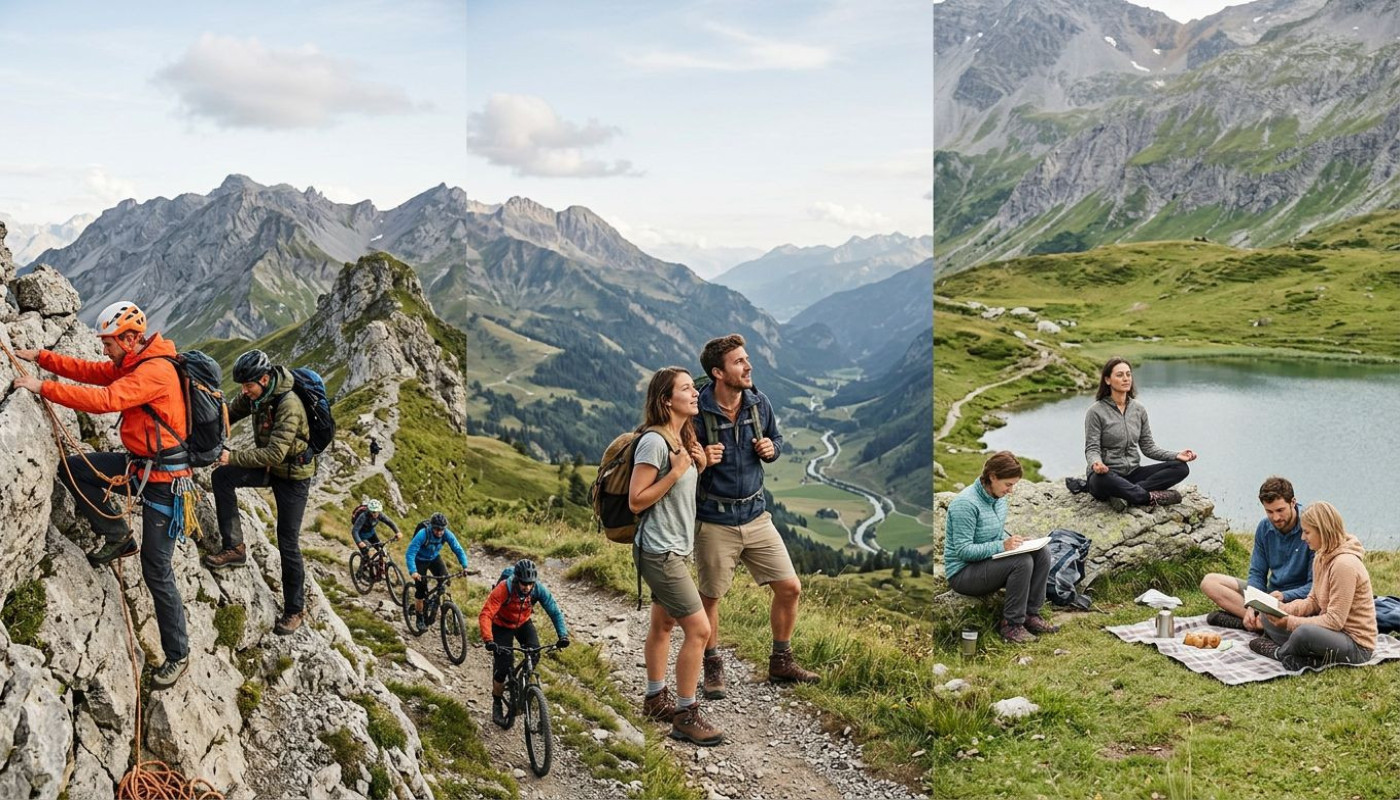
Not everyone climbs a mountain for the view. For many, adrenaline travel is less about recklessness than about structure, and that is the paradox outsiders miss; “extreme” activities can be a highly controlled way to feel intensely alive. Psychology research frequently links sensation seeking to a preference for novelty and intensity, but on the ground, the behaviour often looks like meticulous planning, early alarms, and an obsession with safety ratings, weather windows, and reputable operators.
The boom in adventure is not anecdotal. The Adventure Travel Trade Association has tracked a steady expansion of the sector for years, and while methodologies vary, one message holds across industry reports: demand is broadening beyond the traditional backpacker niche. In the United States, the Outdoor Industry Association estimates outdoor recreation contributes hundreds of billions of dollars to the economy, an indicator of how mainstream activity-led trips have become. In Europe, where rail connections and short-haul flights make “three-day adrenaline breaks” easy, consumers increasingly buy experiences first and destinations second, which is why you see itineraries built around canyoning slots, via ferrata routes, or dive sites rather than around famous squares.
What does that reveal about the traveller? Often, it points to a desire to reset the nervous system by forcing focus. A demanding climb, a fast descent, or a technical dive compresses attention into the present moment, and it can deliver something close to relief for people who spend the rest of their lives multitasking. It also signals social identity: posting a finish line, a summit photo, or a “first-time” certificate is a modern badge, a story that travels well on camera and in conversation.
Yet there is a practical side too. Adrenaline travellers tend to be time-efficient and itinerary-driven, because activities require slots, permits, and conditions, and that habit spills into the rest of the trip. They book transport early, they research contingency plans, and they are more likely to accept pre-dawn departures or long transfers if the payoff is clear. In short, the thrill is real, but so is the underlying impulse to impose order on a world that rarely cooperates.
When “slow” becomes a status symbol
Rest is not a lack of ambition. The rise of slow travel, with longer stays, fewer stops, and a willingness to do “less,” is increasingly a marker of privilege and intention, and it has turned into a quiet form of status. Anyone can sprint through a checklist; fewer people can afford to linger, negotiate a weekly rate, or build a routine in a place they barely know.
There is data behind the shift. The UN World Tourism Organization has repeatedly highlighted the rebound of international travel in recent years, but alongside volume, the conversation has moved toward sustainability and dispersal, in part because overtourism remains politically sensitive in city centres from Amsterdam to Barcelona. Meanwhile, global accommodation platforms have reported growing interest in longer stays and “work-from-anywhere” patterns, and airline and rail operators are adjusting schedules to the reality that some travellers are no longer tied to a seven-day holiday block.
Choosing slower activities, think thermal baths, long lunches, bookshops, local craft workshops, or a day structured around a single coastal walk, often signals that the traveller is seeking regulation rather than stimulation. It can be a response to burnout, a desire to protect sleep, and an attempt to feel present without performing presence for an audience. The itinerary becomes less of a conquest and more of a container, and the destination is asked to provide continuity rather than novelty.
But slow travel is not automatically virtuous, and readers know it. A long stay can still strain housing markets if it competes with local rentals, and “authenticity” can slip into cliché when visitors chase the idea of a simpler life without engaging with the realities of wages, seasons, and public services. What slow travel says about you, then, depends on what you do with the time: do you spend it listening, returning to the same café, learning a few phrases, and understanding how the place works, or do you simply stretch the same consumer habits over a longer calendar?
Culture hunters, and the fear of missing out
Some travellers do not collect thrills, they collect meaning. The cultural itinerary, museums, concert halls, historic sites, guided city walks, food markets with a notebook in hand, often reflects an appetite for context, and sometimes a quiet anxiety about “wasting” a trip. If your bag contains tickets, reservations, and a list of opening times, you may not be rigid; you may be trying to honour the distance you travelled by coming home smarter than you left.
Cultural travel is also less solitary than it looks. Many cultural experiences are social by design, whether it is a small-group tour, a tasting menu, or a theatre evening, and that suits travellers who like shared frameworks for conversation. It can be easier to connect after a guided visit than after a silent hike, because people leave with a common reference point. In that sense, culture hunting signals a preference for structured social contact: you want interaction, but not necessarily the unpredictability of nightlife.
There is a demographic reality too. Age matters, not as a stereotype but as a logistical factor; travellers with limited mobility, families with children, and older visitors often find culture-led days more manageable than high-intensity activity, and destinations respond by bundling accessible transport, timed entry, and multi-site passes. At the same time, the smartphone era has made “seeing” feel urgent. When museums require reservations and popular landmarks cap daily numbers, the fear of missing out becomes practical: if you do not book, you may not get in.
Yet culture-led travel can slip into consumption if it becomes purely extractive, a sequence of photos and facts with no space to absorb. The more interesting signal is how you pace it. Do you alternate busy mornings with empty afternoons, letting the city’s rhythm wash over you, or do you cram five institutions into one day and call it immersion? Your choice of activity is also a choice of tempo, and tempo is often where personality shows itself most clearly.
Nature days, and the need for quiet
Silence has become a scarce resource. Travellers who build their trips around nature, national parks, mountain villages, lakes, coastal paths, birdwatching hides, often sound as if they are escaping civilisation, but many are simply escaping noise. The pull of the outdoors is not only aesthetic; it is physiological, and it is shaped by urban life, constant notifications, and crowded calendars.
The scale of this movement is hard to ignore. Protected areas worldwide have reported heavy visitor pressure in peak seasons, prompting reservation systems and caps in some parks, and outdoor brands have benefited from a cultural shift that treats hiking boots and trail maps as everyday objects rather than specialist gear. Nature-led travel also aligns with the sustainability conversation, at least superficially, because it is easier to argue for “low-impact” days when your plan is a walk, a swim, and a picnic rather than repeated taxi rides between indoor attractions.
What does it say about the traveller? Often, it signals a desire for autonomy. Nature itineraries tend to be less scheduled, more responsive to weather, and more comfortable with uncertainty, which can reflect confidence and self-reliance. They also reveal tolerance for solitude; even when travelling with others, long stretches outdoors create space for parallel experiences rather than constant interaction, and not everyone enjoys that. For some, the outdoors is where they think best, and that is the point.
Still, the outdoor turn has its contradictions. “Hidden” spots become crowded once they are tagged, and fragile environments can suffer when popularity outpaces infrastructure. The most responsible nature travellers plan like professionals, checking trail conditions, respecting closures, and spreading visits beyond the obvious hotspots. If you recognise yourself in that profile and you are looking for a base that balances active days with calmer ones, www.montenegro-spirit.com is one of the practical starting points for shaping a trip around landscapes without losing sight of logistics.
Plan your trip without losing yourself
Budget first, then tempo. Book key activities early, and leave breathing room between them. Check whether local or national schemes support off-season travel, family discounts, or rail passes, and reserve accommodations that match your rhythm. The best itinerary feels like a choice, not a chase.
Similar articles
Why Do Off-the-beaten-path Destinations Create Unforgettable Travel Memories?
Beyond Sightseeing: How Unique Local Activities Transform Your Journey
Could Hidden Villages Reshape Your Next Travel Itinerary?
Are Your Travel Activities Shaped By Local Legends Or Marketing Myths?

Adventure Sports In Wine Country: From Rock Climbing To Kayaking

Essential Packing Checklist For Your Upcoming Sailboat Holiday

Exploring The Benefits Of Renting Versus Buying Ski And Bike Equipment

Exploring The Charm Of A 3-star Boutique Hotel In Paris's 13th District

Exploring The Benefits Of Seasonal Camping In A Luxury Setting
