Table of contents
Discovering a new city can be daunting, especially when faced with a maze of unfamiliar public transport systems. Navigating public transport like a local in Japan unlocks a level of freedom, efficiency, and cultural insight that transforms your experience. Dive deeper into the following paragraphs to uncover insider strategies, key etiquette tips, and practical guidance that will make your journey seamless and rewarding.
Mastering the basics of ticketing
Understanding the intricacies of purchasing and using tickets in Japan is fundamental for anyone relying on Japanese public transport. Travelers will encounter a variety of options, including single-ride tickets, day passes, and rechargeable IC cards like Suica and Pasmo. Single-ride tickets offer straightforward access for one journey, while day passes provide unlimited travel within designated zones, ideal for those planning extensive exploration. IC cards, which can be loaded with credit at ticket machines or kiosks, are widely accepted and offer seamless transitions between trains, buses, and even some convenience stores. Learning how to buy tickets is streamlined, as stations feature multilingual ticket machines that allow users to select destinations, view train fares, and pay with cash or card. Machines display maps with fare amounts, and users simply press their stop, insert payment, and receive a ticket to be scanned at entry gates.
When entering or exiting stations, travelers insert their tickets into automated gates, which validate and return them. IC card holders tap their cards on the reader for swift access. If a passenger has underestimated the fare or taken a longer route than initially planned, fare adjustment machines located near exits allow for quick resolution. Insert the original ticket, and the machine calculates any difference, enabling payment of the outstanding amount on the spot. Tickets in Japan are designed to maximize efficiency and flexibility, supporting both planned itineraries and spontaneous detours. By familiarizing oneself with ticket machines, understanding how train fares are calculated, and knowing how to address fare discrepancies, navigating the Japanese public transport system becomes intuitive and stress-free for any visitor.
Decoding routes and maps
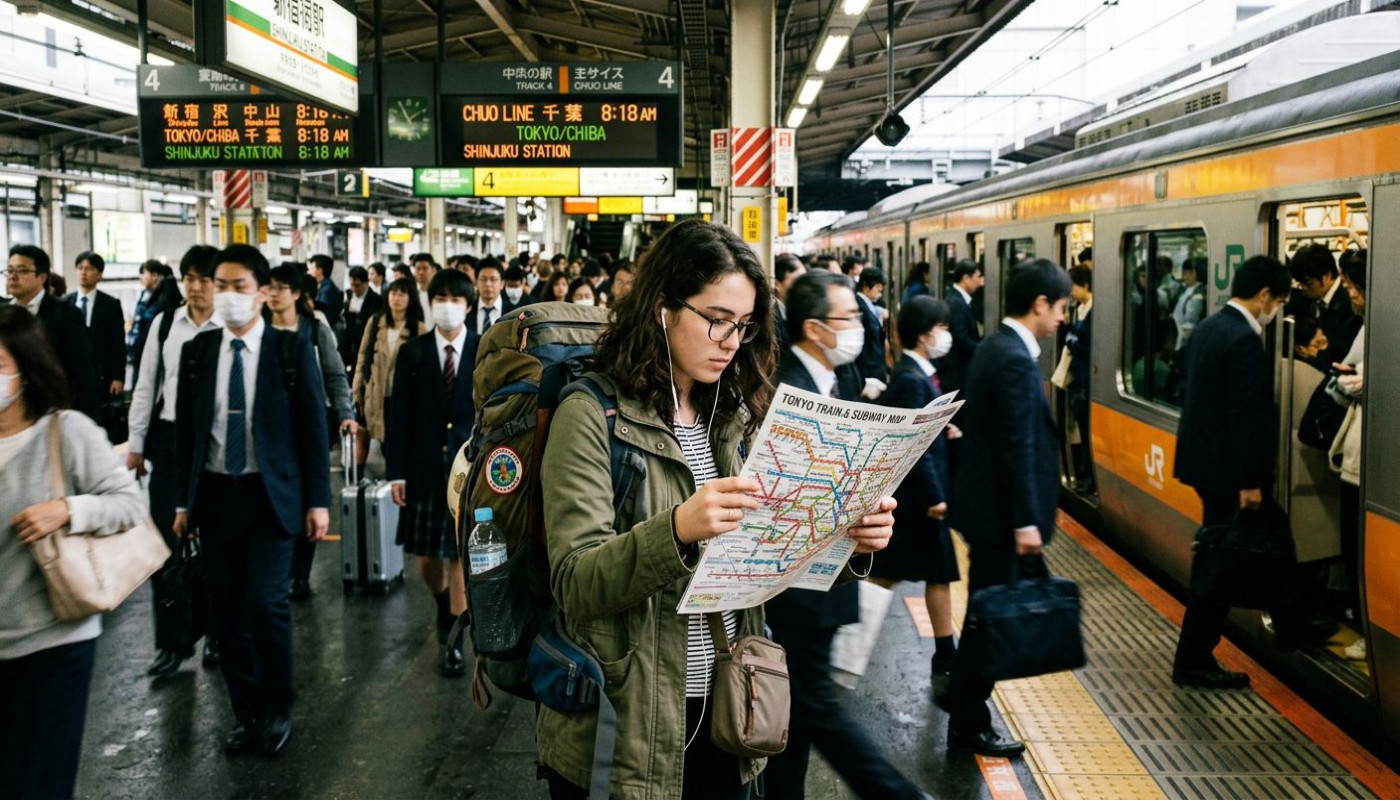
Navigating the intricate network of train routes Japan offers can initially seem daunting, but a clear understanding of transport map Japan systems reveals an efficient and accessible structure. Urban areas like Tokyo and Osaka feature extensive subway maps, which use color-coding and station numbering to simplify route planning, even for those unfamiliar with Japanese script. Key indicators on these maps highlight transfer point locations where travelers can seamlessly switch between different train or subway lines, optimizing travel time and convenience. These transfer points are central to planning multi-line journeys, as they interconnect various operators and lines within the city’s transit grid, enabling flexible mobility across sprawling metropolitan areas.
When engaging with Japanese bus lines—especially outside major cities where bus services supplement or replace trains—routes are often mapped at stops and online, with schedules meticulously maintained. Reading these requires attention to route numbers, destination signs, and the schedule grid, which may differ between weekdays and weekends. In rural regions, fewer English-language resources may be available, so identifying landmarks, end stations, and color-coded lines on the transport map Japan becomes especially valuable. Efficient journey planning involves noting the timing of last departures, as rural and suburban services may cease earlier than urban transit.
To plan journey Japan effectively, utilize digital tools and mobile applications that integrate train, subway, and bus networks for real-time routing and fare calculation. Apps like Hyperdia and Google Maps allow users to input departure and arrival stations, automatically generating the quickest or simplest routes, including suggested transfer point options. Cross-referencing these digital resources with physical subway maps and station signage ensures clarity, especially during peak hours or in busy terminals. For a truly local experience, consider seeking out neighborhood-specific transport maps, which often highlight shortcuts and less crowded routes favored by residents, ensuring both efficiency and a deeper connection to Japan’s unique urban and rural transportation landscape.
Etiquette and unspoken rules
Adhering to Japan transport etiquette ensures a smooth experience when navigating the country's highly efficient rail and subway systems. Public transport manners play a significant role in daily life; passengers are expected to keep conversations at a low volume and set mobile phones to silent mode, especially in carriages where phone calls are strictly discouraged. Observing train behavior Japan reveals the practice of prioritizing silence and personal space, with many commuters engrossed in books or their phones without disturbing others. Queuing is a fundamental aspect of Japanese commuter customs—orderly lines form at marked areas on platforms, and boarding is done calmly, allowing passengers to disembark first.
Respect for priority seat sections is deeply ingrained, as these are reserved for the elderly, pregnant women, people with disabilities, and passengers with small children. Even if such seats are unoccupied, it's customary to avoid using them during busy hours, and to vacate immediately if someone in need boards the train. Subway rules also include not eating or drinking, refraining from spreading personal belongings, and keeping bags on laps or overhead racks to avoid inconveniencing others. Blending in with these norms not only enhances your experience but also demonstrates appreciation for the local culture. For travelers seeking detailed guides and region-specific advice on public transport and Japanese commuter customs, Japan Atlas offers valuable resources to help visitors integrate seamlessly into daily life.
Timing and peak hour navigation
Understanding rush hour Japan is vital for anyone wishing to experience efficient and comfortable journeys. Trains and subways, renowned for their punctuality, operate on meticulously planned timetables, which can be accessed via mobile apps, station displays, or official websites. Commuter congestion typically peaks between 7:30-9:00 AM and 5:00-7:30 PM on weekdays, especially in urban centers like Tokyo and Osaka. Savvy travelers looking to avoid crowds Japan should consider traveling outside these periods, with the best travel time Japan usually found in the late morning or early afternoon on weekdays.
Reading a train schedule Japan is straightforward once one becomes familiar with platform signage and digital boards, which detail train types, departure times, and destinations simultaneously in Japanese and English. Subway timing is equally precise, with most networks running trains every few minutes during busy periods. Planning ahead by consulting the timetable allows travelers to optimize routes, minimize waiting times, and secure seating, ensuring each journey is not only timely but also less stressful. By aligning travel plans with off-peak hours, riders maximize efficiency and comfort throughout Japan’s vast and well-coordinated public transportation network.
Dealing with unexpected situations
When navigating Japan’s public transport system, unexpected challenges like train delay Japan, sudden service changes, or becoming lost in Japan can occur even for seasoned travelers. In such moments, confidently approach the information desk found in most train stations; multilingual staff are trained to provide public transport help, from route alternatives to maps for travel troubleshooting Japan. Digital displays and station announcements may be primarily in Japanese, so it helps to use translation apps or carry destination names written in Japanese script to bridge the language barrier Japan. For rerouting during a delay or service disruption, consult the nearest information desk for live updates and alternate connections. Should you find yourself disoriented, follow the clear station signage, and do not hesitate to show your intended destination to staff or fellow passengers, who are often willing to assist despite language challenges. Preparation, attentiveness to official updates, and a willingness to ask for support are the best strategies for overcoming any public transport obstacle efficiently.
Handling these unforeseen events requires adaptability and knowledge of the system’s resources. Japan’s public transport networks are equipped with frequent announcements and signage; even if these seem complex due to the language barrier Japan, visual cues like color-coded maps and platform numbers are helpful. If lost in Japan, use station Wi-Fi to access navigation apps or official railway websites, which often provide alternative routes during a train delay Japan. When communication proves difficult, showing your ticket, itinerary, or a station map to staff at the information desk simplifies requests for public transport help. This proactive approach ensures you can quickly recover from detours and continue exploring with confidence, making travel troubleshooting Japan an opportunity to experience the efficiency and hospitality of the country’s renowned transit system.
Similar articles
